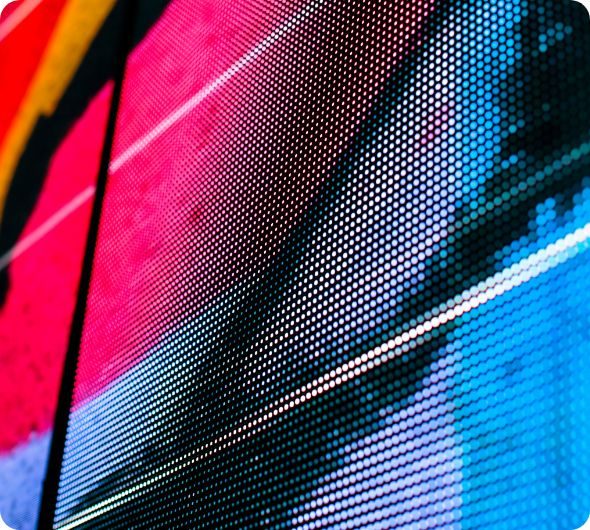
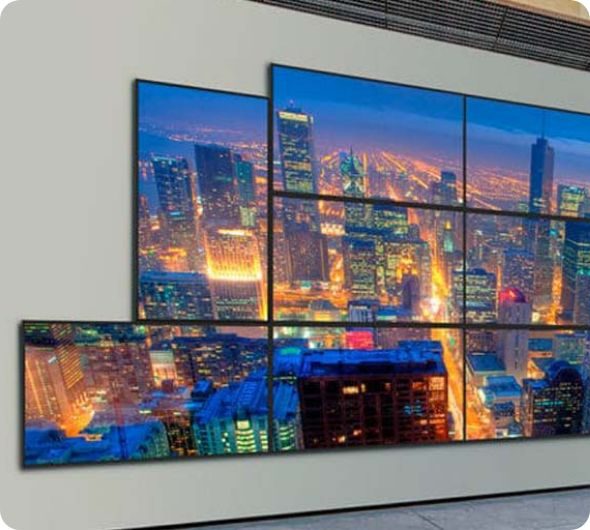
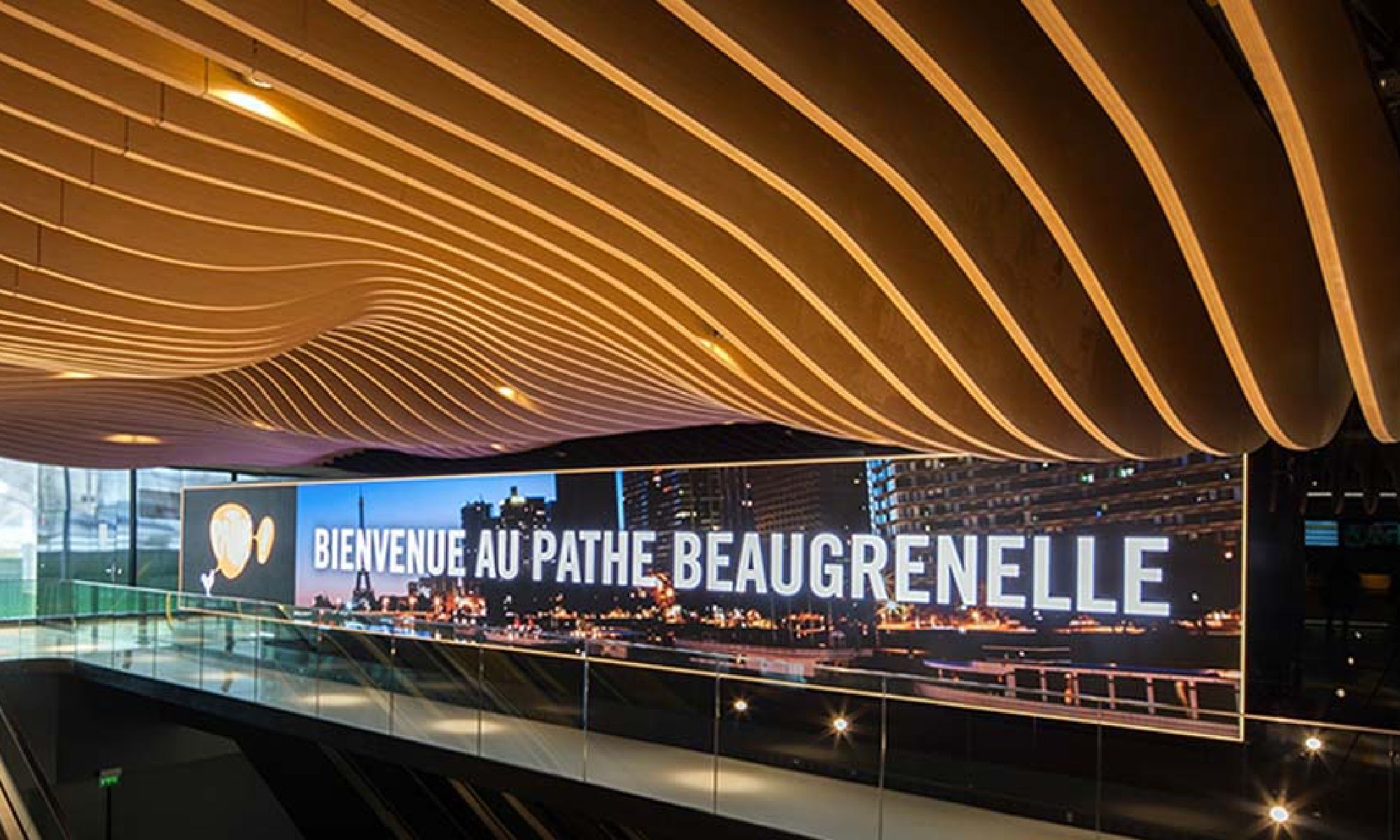
Originally, video walls consisted of several TV sets or monitors placed side by side. The aim was to give the illusion of a single large surface. However, this system presented a major problem: the large frames that encircled the viewing surface of each TV set. This meant that the originally desired single canvas was cut out, impairing visual performance. New technologies were therefore developed to minimize the “empty” (pixel-free) space between the various screens. Today, video wall solutions generally use LCD mosaic or OLED screens.
Video walls are available in a wide range of sizes, generally with a diameter of between 46″ and 80″. The choice of screen size generally depends on the content and viewing distance: if the viewer is close to the screen, the pixel density needs to be high enough so that individual pixels are indistinguishable. Resolution also depends on the size of the wall.
The benefits
High brightness
Uniform color rendering and deep blacks
Optimal contrast and brightness
Ultra-thin edges
Wide viewing angle
Streamlined design
Easy-to-use interface
24/7 operation
Applications
Shopping centers
The stores
The shops
Hotel lobbies
Airports
Car dealerships…
Our achievements
Discover the different LCD / OLED video walls created by Actif Signal.